Hot Spots
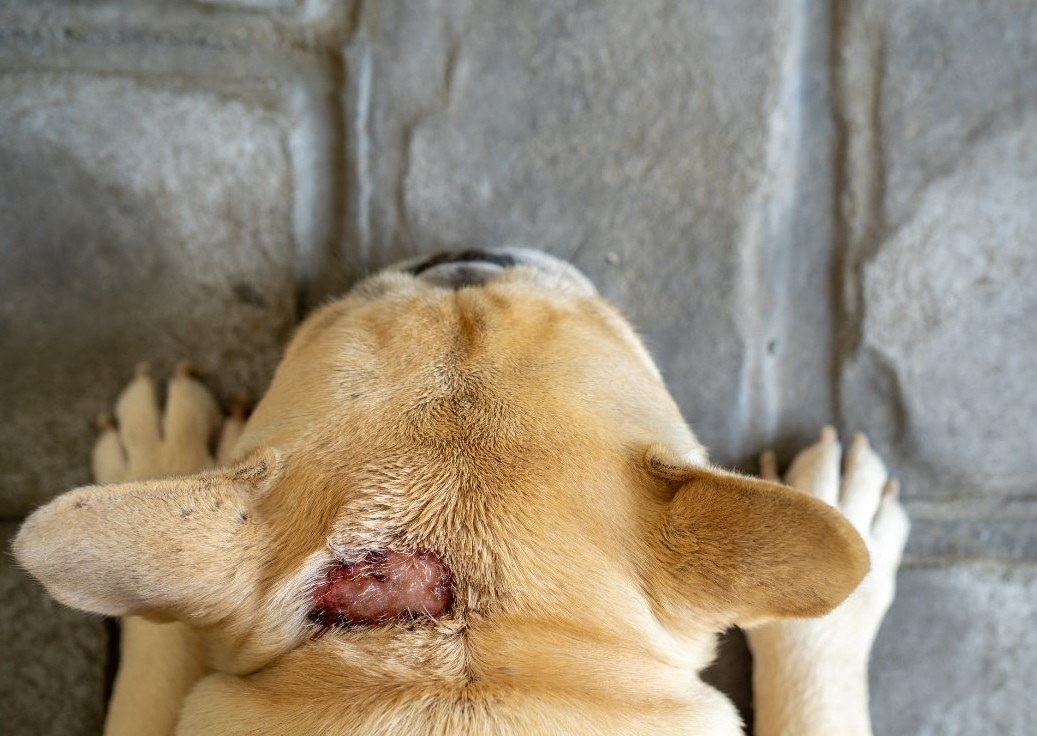
What is a hot spot?
A hot spot is a moist, inflamed area of skin that can appear and spread surprisingly quickly. Also known as acute moist dermatitis or pyotraumatic dermatitis, hot spots are most commonly seen in dogs.
They usually begin when itching, irritation or discomfort causes a dog to lick, chew or scratch. This damages the skin and keeps the area warm and moist, creating a cycle that can be difficult to break.
Hot spots can occur anywhere, although they are commonly found around the cheeks, neck, hips and thighs. Irritation around an ear may also lead to a hot spot on the cheek or side of the neck.
Some dogs are particularly prone to them, especially during warmer weather or when a dense, wet or shedding coat traps moisture against the skin.
Look beyond the hot spot
The sore patch is what we can see, but it is not always where the problem started.
Possible triggers include fleas and other insects, environmental allergens, food reactions, an irritated ear, a wet or matted coat, contact with plants, or another skin problem. Pain or discomfort elsewhere may also lead to persistent licking, including over an uncomfortable joint or around sore anal glands.
Excellent nutrition can support longer-term skin health, but an active, painful hot spot still needs prompt attention.
Treating the active hot spot
Hot spots can be painful and may become much larger in a short time. The damaged skin can also develop a bacterial infection, which may extend more deeply in some cases.
Veterinary treatment may include clipping the surrounding coat so the area can be properly examined, cleaned and kept dry, relieving the itching and discomfort, and treating infection where present.
Seek veterinary advice promptly if the area is wet or weeping, strong-smelling, painful, spreading quickly or difficult to stop your pet from licking. Avoid heavy creams or oils that may trap further moisture against the skin.
Preventing another flare-up
Once the area has settled, consider what first caused the licking or scratching. Flea management, ear health, coat care, drying thoroughly after swimming or wet walks, environmental exposure, pain, food and gut health may all form part of the longer-term plan.
Settle the hot spot. Look for what drove it. Support healthier, more resilient skin from the inside-out.
Look Beyond the Itch
At Raw Essentials, we look beyond the sore or itchy area. We start with what is going into the bowl, how well the gut is functioning and what may be keeping the immune system on high alert.
We aim for root-cause resolution wherever possible. That means identifying and addressing the factors driving the problem.
Food and gut health may influence inflammation, the strength of the skin barrier and how well a pet copes with environmental allergens. In some pets, specific dietary proteins may also contribute.
Keep it simple. Start with the foundations.
A clean, species-appropriate diet provides a strong foundation for healthy skin. We recommend removing all grains, starches, additives and preservatives and reviewing everything they eat, including meals, treats, chews, supplements, flavoured medications and any food they may get from other people.
Sometimes progress begins with what we take out, rather than what we add.
Some pets may also benefit from a carefully planned novel-protein feeding plan.
The environment matters too. Grasses, pollen, dust mites, mould, tradescantia and other plants, damp conditions, new carpets, bedding, floor cleaners and fragranced household products may all play a part. Triggers may be seasonal or present throughout the year. We cannot always avoid them completely, but noticing patterns can provide valuable clues.
Excellent nutrition helps build healthier, more resilient skin from within.
Written by Dr Rebecca Brown, BVSc
Veterinarian, Raw Essentials
Last updated: 4 September 2026
Raw Essentials | Wildly Good Advice & Nutrition

New Zealand's raw pet food experts
Locally sourced frozen raw pet food
Natural treats and freeze dried pet food
17 pet friendly stores across New Zealand
Nationwide raw pet food delivery
[email protected]
Copyright Raw Essentials Limited. All rights reserved.
RAW ESSENTIALS | Wildly Good Advice & Nutrition
New Zealand's raw pet food experts
Frozen raw, treats and freeze dried pet food
17 pet friendly stores across New Zealand
[email protected]
Copyright Raw Essentials Limited. All rights reserved.